
A rapid evolution has occurred in cancer diagnostic tools, allowing them to become more accurate, efficient, and cost-effective. These innovations hold immense promise for the future of oncology treatment. Realizing their potential requires collaboration among manufacturers, regulatory bodies, and healthcare providers to address critical issues. The advancements in cancer diagnosis promise to improve outcomes for countless patients. Particularly noteworthy are diagnostic tools capable of pinpointing specific molecular alterations within tumors, a crucial component of precision medicine in oncology. These innovations pave the way for more accurate diagnoses and tailored treatment approaches, offering hope and improved prospects for individuals with cancer.
The global cancer diagnostics market is poised for substantial growth, projected to surge from USD 98.26 bn in 2023 to USD 145.18 bn by 2028, at a CAGR of 8.12 percent. In an era marked by increasingly intricate cancer treatments that rely heavily on biomarkers and genomic testing, electronic medical records (EMR) are amassing vast amounts of patient data. This data explosion, combined with data analytics and artificial intelligence (AI) integration, offers burgeoning prospects in advancing cancer diagnostics, predicting and monitoring therapy responses, and potentially enhancing patient outcomes. Personalized medicine, leveraging biomarkers and big data, identifies treatment-responsive patients based on tumor types, forecasts treatment results, and monitors safety and efficacy. The shift toward next-generation sequencing (NGS) cancer testing reflects the recognition of testing multiple biomarkers in individuals, expediting the identification of genetic mutations and variants.
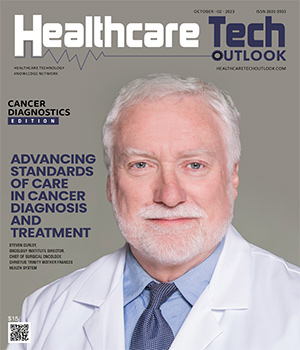
This edition of Healthcare Tech Outlook brings to readers the key developments in cancer diagnostics and how firms leverage the latest technologies to offer top-notch services. It features thought leadership articles from Jandria Jackson, MBA, R.T.(R) (T), Oncology Director, Wellstar Health System, and Dr. Jennifer A Wick PharmD, MPH, BCACP, Assistant Director of Pharmacy for Ambulatory Services, and Dr. Burns C Blaxall Ph.D., FACC, FAHA, FISHR, FAPS, Executive Director, Precision Health at The Christ Hospital Health Network.
Jandria Jackson talks about strengthening workforce retention in healthcare. Leaders need to pay special attention to developing specific strategies to retain and recruit employees that will be instrumental in providing better patient care. Dr. Jennifer A Wick and Dr. Burns C Blaxall highlight the importance of incorporating pharmacists in a healthcare unit's patient care services. This integration can be instrumental in helping providers navigate complex genetic interactions, enabling more focused patient care activities, and facilitating collaborative treatment planning across various conditions.
This edition features stories from companies that bring their solutions and services to this space.
In this edition featuring the Top Cancer Diagnostics Solutions Providers in 2023, we hope you find the appropriate company suited to your business requirements.
Let us know your thoughts!